Series

Salaputia Brass
Salaputia Brass

at present 2 productionsSalaputia Brass

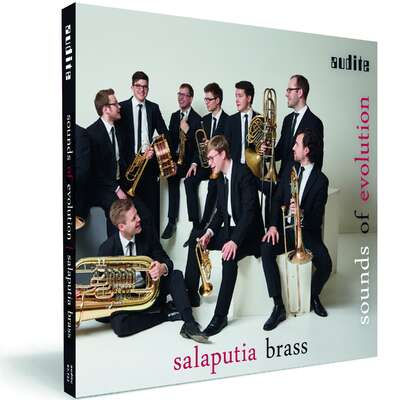
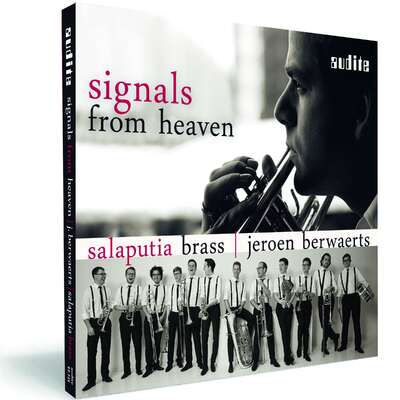
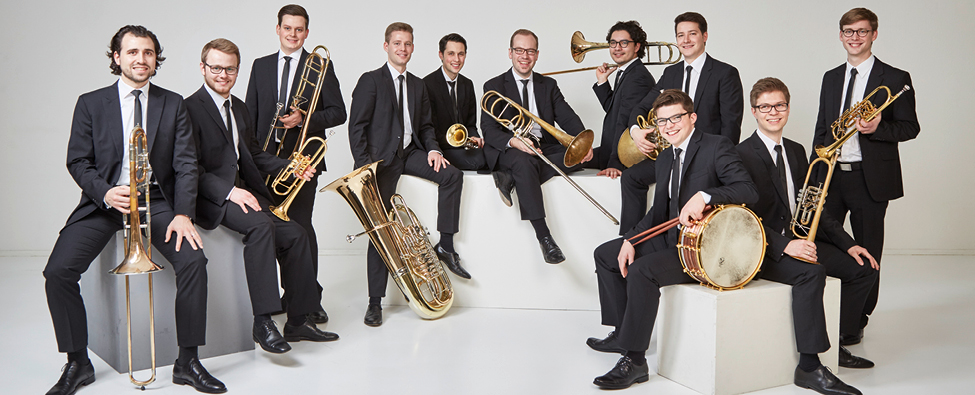
What do you get when eleven young musicians join together, who met already as young musicians while playing for the Bundesjugendorchester (German National Youth Orchestra) and now play as professional musicians in famous German orchestras? Salaputia Brass - a first-class brass ensemble, with a wide-ranging repertoire.

On their debut CD "Sounds of Evolution", the young musicians present their commissioned works, written especially for their formation by well-known composers from around the world, including great names such as Daniel Schnyder, Derek Bourgeois and Ingo Luis.

The follow-up CD "Signals from Heaven" combines spirituals and spiritual music by Takemitsu, Gabrieli, Monteverdi, Gershwin and Ellington. The developed concept of this CD by Jeroen Berwaerts, who performs here in cooperation with Salaputia Brass as a trumpet soloist and jazz vocalist and directs the ensemble, does not represent "crossover" but a combination of voices which have something to say to one another. This search for a soulful profundity in music unites all participating artists, as well as the aim of connecting people through music.​

more

Music from the Muri Monastery Church

at present 4/8 productionsMusic from the Muri Monastery Church

The practice of multiple choir music-making reached a climax with Giovanni Gabrieli in the balconies of San Marco in Venice towards the end of the 16th century, and from there gained a wide style-forming influence far beyond the borders of Italy. The octagonal church interior of the Muri Monastery Church with its four balconies  was specially designed for multiple choir music-making by the abbots and master builders. The four balconies of the Muri Monastery Church offer ideal conditions for the performance of works for multiple choirs.
Introduced by the rediscovery of the "Mass of Muri", which could be definitively ascribed to Johann Valentin Rathgeber in 2005, audite began a series in 2007 consisting of eight parts so far, completely dedicated to the symbiosis of the outstanding spatial acoustics of the church and the sounds of historical Instruments - including the four balconies of the Muri Monastery Church whenever possible. In addition, this is a sonic documentation of the two historical Bossart organs from the early 17th century. These instruments enjoy great prestige beyond the borders of Switzerland as an important sonic monument visited by specialists and amateurs from all over the world each year.
The production "Christ lag in Todesbanden", in which settings by four baroque composers of this Easter chorale are contrasted, is, at the same time, the first recording of the great organ of the Muri Monastery Church following its comprehensive restoration. "Music for Two Organs" with compositions of the 17th century Habsburg court in Vienna - recorded in the Muri Monastery founded by the predecessors of the Habsburgs - is also primarily dedicated to the sonic interplay between the two Bossart organs.
The recording "Echo & Risposta" turns to the musical practice of the early Baroque period in succession to Giovanni Gabrieli. The choirs entering into dialogue with each other were distributed over four balconies so that the architecture of the church could be best used for the sonic design.
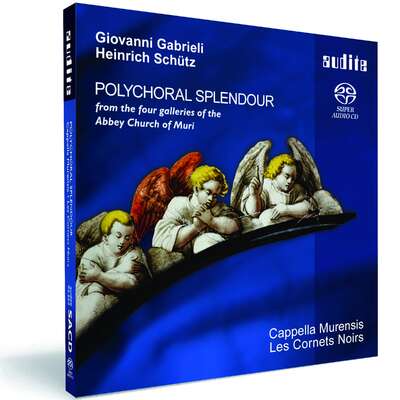
The recording "Polychoral Splendour" with works by Heinrich Schütz and Giovanni Gabrieli is a highlight of this impressive sonic and spatial effect; it received an International Classical Music Award (ICMA) in 2012. In accordance with the historical model, the Cappella Murensis and the Ensemble Les Cornets Noirs make use of the situation of the four music balconies: in the works for two, three and four choirs, voices and instruments blend together with the four continuo organs to form a unique sound. The two historical Bossart organs ("Epistle Organ" and "Gospel Organ") are also used. The use of these two great organs ensures additional dynamic range.
Johannes Strobl - the organist of the Catholic church community of Muri in the canton of Aargau since 2001 and in charge of all recording projects - has proven himself, together with the Cappella Murensis, Les Cornets Noirs and the Ensemble Arcimboldo, an outstanding specialist for the performance practice of Early Music. Together with the ensembles, he regularly cultivates music-making in multiple choirs at considerable distance from each other.

more

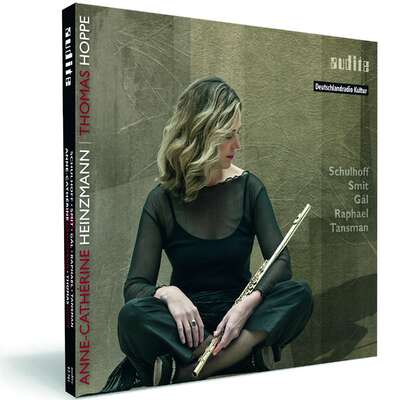
Anne-Cathérine Heinzmann: Works for Flute

at present 2 productionsAnne-Cathérine Heinzmann: Works for Flute

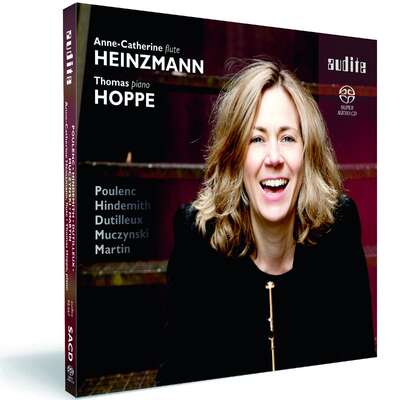
​In the twentieth century, the flute underwent a remarkable revival as a solo instrument. The first part of this series includes amongst others sonatas by Henri Dutilleux and Francis Poulenc which represent the impulse for this development, originated in France. Beside works for flute by Paul Hindemith, Robert Muczynski and Frank Martin they belong to the core repertoire of this instrument. The second part of this series deals with rearly heard works by Schulhoff, Smit, Gál, Raphael and Tansman. In their respective aesthetics, each composer shares the ability to use forms and models of music history as inspiration for his own modern musical language. Existentially, they shared a common fate: all were persecuted by the National Socialists. Some were murdered in concentration camps and others fled to continue their lives in exile.

Anne-Cathérine Heinzmann is one of the most renowned German flautists of her generation. She regularly performs as a soloist, chamber and orchestral musician in Germany and across the globe. She is co-principal flute of the Opern- und Museumsorchester Frankfurt am Main; in addition, since October 2009 she is Professor of Music at the Hochschule für Musik in Nuremberg.

more

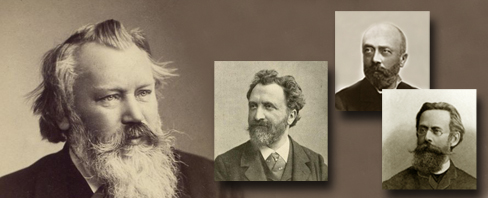
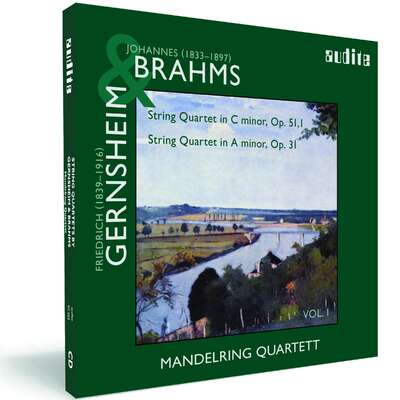
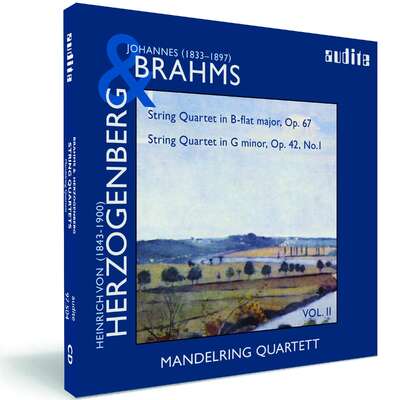
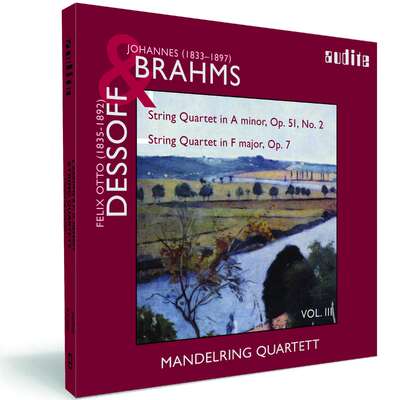
String Quartets by Brahms and His Contemporaries (Gernsheim, von Herzogenberg and Dessoff) with the Mandelring Quartet

3 of 3 productionsString Quartets by Brahms and His Contemporaries (Gernsheim, von Herzogenberg and Dessoff) with the Mandelring Quartet

This edition compares and contrasts string quartets of Johannes Brahms and his contemporaries Friedrich Gernsheim, Heinrich von Herzogenberg and Felix Otto Dessoff on three CDs.
There were close contacts as well as looser ones between Brahms and the other composers, and musical references to Brahms in the works of his contemporaries cannot be denied. Nonetheless, their string quartets bear witness to an individual treatment of this demanding genre and Gernsheim, Herzogenberg and Dessoff confront the Brahms string quartets with independent compositions thoroughly equal in value. Herzogenberg's String Quartet in G minor, Op. 42/1 is presented by audite as a world premiere recording.

more

Bach and his predecessors

2 of 2 productionsBach and his predecessors

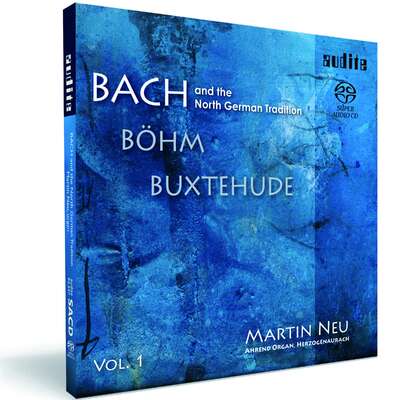
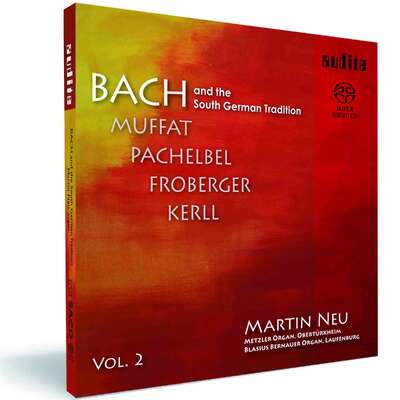
This series impressively documents, on two SACDs, the influences of both North and South German composers on the organ works of Johann Sebastian Bach.
Whereas contrasting his compositions with works of Georg Böhm and Dieterich Buxtehude especially shows the influences of North German masters on Bach's early works, the second part of the series points out reminiscences of Bach's organ works in selected compositions of South German composers, including Johann Jakob Froberger, Johann Caspar Kerll, Georg Muffat and Johann Pachelbel. In addition, the historical performance practice of Magnificat prayers is realised here: works of Pachelbel and Bach are newly combined, including Magnificat verses sung according to the traditional sequence and combined to form a musical unity.

more

...