






Add download to your cart

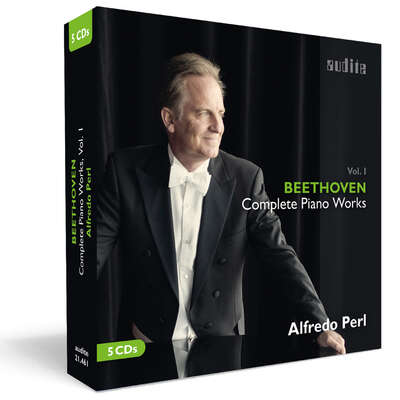
21462 - Ludwig van Beethoven: Complete Piano Works, Vol. 2
aud 21.462
please choose the quality
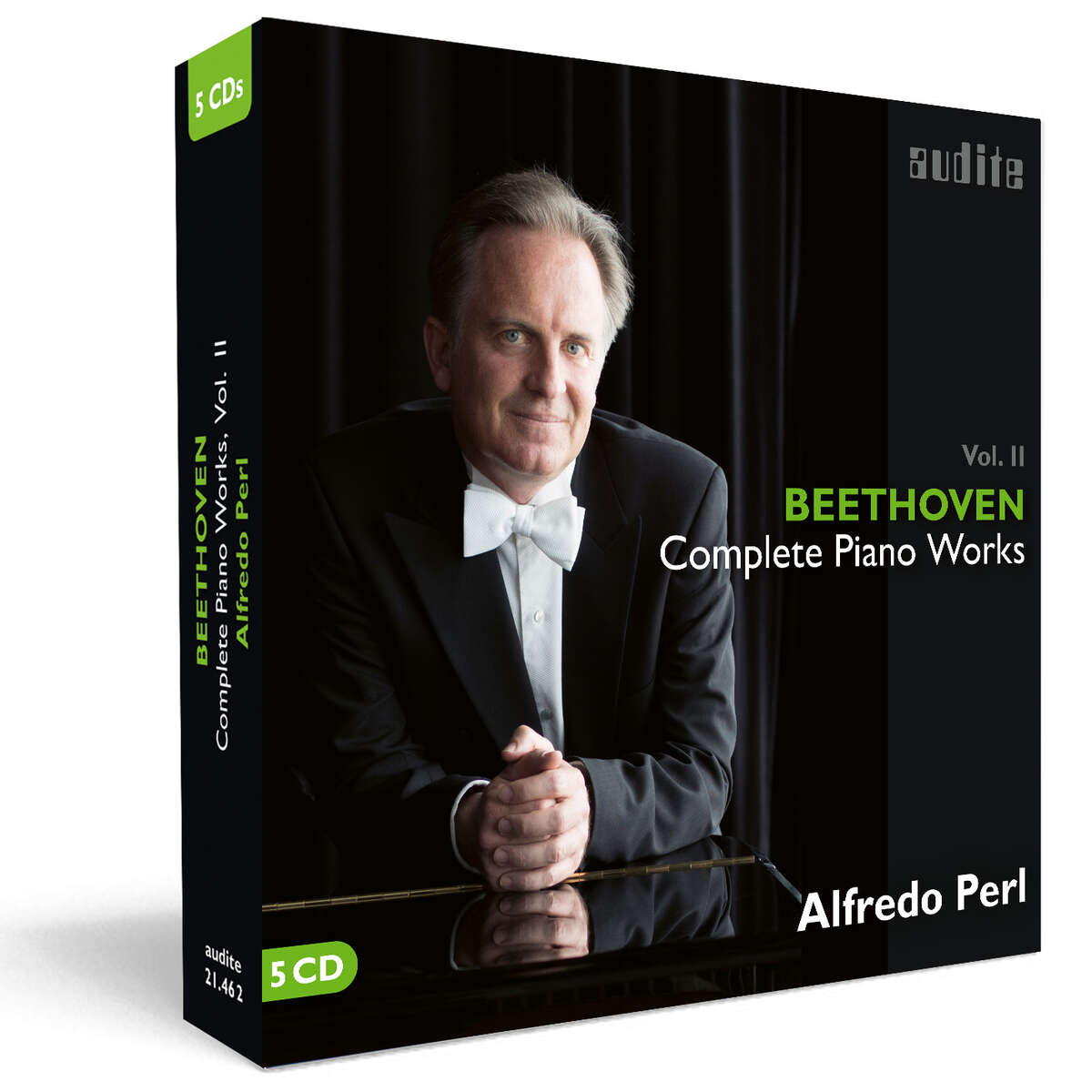
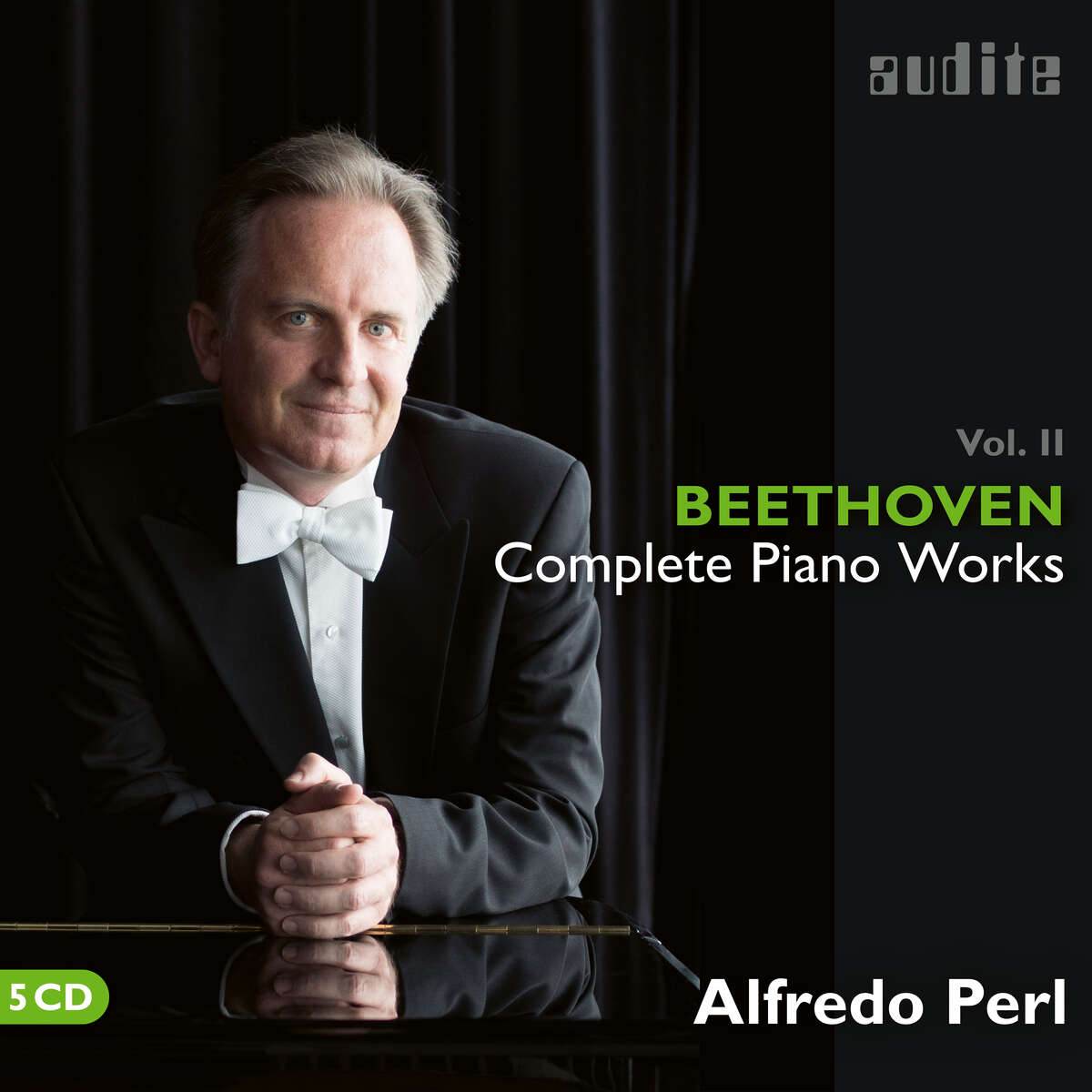
In the second instalment of Alfredo Perl’s complete recording of Beethoven’s piano works, the sonatas, variations, bagatelles and individual pieces composed during the so-called “classical” period (1801–1814) take centre stage. Their expressive power and innovative virtuosity constitute a landmark in the history of piano music.more
Ludwig van Beethoven


"Beyond his deeply impressive technical prowess, it is his artistic signature that captivates above all else. [...] The tension never wanes, and Perl once again transports us into realms of musical experience as only a master like him can." (Pizzicato)


Track List
CD 1 von 5 (01:15:25)
Ludwig van Beethoven Piano Sonata No. 13 in E-Flat Major, Op. 27/1 'Quasi una fantasia' (15:51) Alfredo Perl
Ludwig van Beethoven Piano Sonata No. 14 in C-Sharp Minor, Op. 27/2 'Moonlight' (15:27) Alfredo Perl
CD 2 von 5 (01:14:54)
CD 3 von 5 (01:17:17)
Ludwig van Beethoven 15 Variations and a Fugue on a Theme from "The Creatures of Prometheus", Op. 35 'Eroica Variations' (24:19) Alfredo Perl
CD 4 von 5 (01:13:51)
CD 5 von 5 (01:13:26)
Details
| Ludwig van Beethoven: Complete Piano Works, Vol. 2 | |
| article number: | 21.462 |
|---|---|
| EAN barcode: | 4022143214621 |
| price group: | BCG |
| release date: | 8. May 2026 |
| total time: | 374 min. |
Bonus Material
Informationen
Following the internationally acclaimed first instalment of Alfredo Perl's three-part complete recording of Ludwig van Beethoven's piano works, the second box set spans the years 1801-1814. Musicological literature has long referred to this period as Beethoven's "middle" or "classical" phase; yet such labels risk obscuring a compositional and aesthetic practice fundamentally defined by recourse to the past as well as foreshadowings of the future, and by Beethoven's profound identification with his instrument. For him, the piano was a medium of self-exploration and of engagement with the world, a means of articulating the most intimate personal experience on the one hand and of responding to collective historical and political upheaval on the other.
Of the fourteen sonatas included here, at least six belong to the core repertoire of every pianist. Their popularity is reflected in the sobriquets - mostly not of Beethoven's own invention - by which they are known: the "Moonlight" (Op. 27/2), "Pastoral" (Op. 28), "Tempest" (Op. 31/2), "Waldstein" (Op. 53), "Appassionata" (Op. 57), and "Les Adieux" (Op. 81a). Among the variation sets, the "Eroica" Variations Op. 35 and the C minor Variations WoO 80 have long held a special fascination for performers and audiences alike. Yet most famous of all is the piano piece "Für Elise", composed in 1810. For Beethoven it may have amounted to little more than a finger exercise, but it nonetheless demonstrates his ability to conjure an entire musical world out of the simplest motifs and gestures.
This spectrum of elemental expressive power to unprecedented virtuosity makes clear why Beethoven's piano works from this period represent a milestone in the history of the instrument's repertoire.
Reviews

ARTAMAG | 6 octobre 2026 | Jean-Charles Hoffelé | October 6, 2026 | source: https://www.arta... Retour à Beethoven suite
Je ne redirai pas ici l’excellence du projet et de sa réalisation déjàMehr lesen
Aus urheberrechtlichen Gründen dürfen wir ihnen diese Rezension leider nicht zeigen!
Je ne redirai pas ici l’excellence du projet et de sa réalisation déjà

Condor
| 7 July 2026 | Walter Krumbach | July 7, 2026 | source: https://www.cond...
Alfredo Perls bemerkenswerte Beethovensonaten-Einspielung
Zweite Box im Mai erschienen
[...] die Produktion [veranschaulicht] die Deutung eines Künstlers, der sich mit dem Stoff umfassend auseinandergesetzt hat. Dabei glückte es ihm, die Werke kongenial in Tonsprache umzusetzen.Mehr lesen
Aus urheberrechtlichen Gründen dürfen wir ihnen diese Rezension leider nicht zeigen!
[...] die Produktion [veranschaulicht] die Deutung eines Künstlers, der sich mit dem Stoff umfassend auseinandergesetzt hat. Dabei glückte es ihm, die Werke kongenial in Tonsprache umzusetzen.

Piano News | 4/2026 (Juli/August 2026) | Carsten Dürer | July 1, 2026
Perl ist kein Pianist, der sich beweisen will oder muss, sondern einer, der der Musik auf den Grund geht. Hier entsteht eine großartige Gesamteinspielung von Beethovens Klavierwerk!Mehr lesen
Aus urheberrechtlichen Gründen dürfen wir ihnen diese Rezension leider nicht zeigen!
Perl ist kein Pianist, der sich beweisen will oder muss, sondern einer, der der Musik auf den Grund geht. Hier entsteht eine großartige Gesamteinspielung von Beethovens Klavierwerk!

De Gelderlander | 1. Juli 2026 | Maarten-Jan Dongelmans | July 1, 2026 | source: https://www.geld... Alfredo Perl etaleert parelende pianistiek in Beethoven
Perl blijft meesterlijk maar zijn interpretatie heeft duidelijk aan diepte gewonnen, terwijl de dynamiek meer uitersten vertoont. [...] Perl slaagt er moeiteloos in dit hybride stuk als een samenhangend geheel te presenteren. Met een alles overziende blik worden de vele contrasten tot één geheel gesmeed.Mehr lesen
Aus urheberrechtlichen Gründen dürfen wir ihnen diese Rezension leider nicht zeigen!
Perl blijft meesterlijk maar zijn interpretatie heeft duidelijk aan diepte gewonnen, terwijl de dynamiek meer uitersten vertoont. [...] Perl slaagt er moeiteloos in dit hybride stuk als een samenhangend geheel te presenteren. Met een alles overziende blik worden de vele contrasten tot één geheel gesmeed.
Condor
| 22 May 2026 | Walter Krumbach | May 22, 2026 | source: https://www.cond...
Empfehlenswerte Klassikeinspielungen – Mai 2026
Neu auf dem Plattenmarkt
Nach seiner erfolgreichen Gesamteinspielung in den 1990er Jahren begab sichMehr lesen
Aus urheberrechtlichen Gründen dürfen wir ihnen diese Rezension leider nicht zeigen!
Nach seiner erfolgreichen Gesamteinspielung in den 1990er Jahren begab sich

www.pizzicato.lu | 08/05/2026 | Remy Franck | May 8, 2026 | source: https://www.pizz... Beethoven mit gestalterischer Handschrift
Alfredo Perl hatte mit seinem ersten Set von Beethovens Klavierwerken die Messlatte sehr hoch gelegt, und das zweite Set bleibt auf demselbenMehr lesen
Alfredo Perl hatte mit seinem ersten Set von Beethovens Klavierwerken die Messlatte sehr hoch gelegt, und das zweite Set bleibt auf demselben Niveau.
Über alles Technische hinaus, das mit seiner stupenden Klarheit sehr beeindruckt, ist es vor allem die gestalterische Handschrift die fasziniert. Seine Sonaten sind genauso suggestiv wie die Variationen.
Die Dynamik und die farblichen Nuancen, die vielen spontanen Akzente unterstützen die Ausdrucksweise Beethovens, ohne ihre klassischen Fundamente zu leugnen, ohne sie ihrer Sensibilität zu berauben.
Die Spannung fällt nie ab, und Perl entführt uns einmal mehr in Sphären musikalischen Erlebens, wie halt nur ein Meister wie er es tun kann.
Mit einer derart zwingenden Rhetorik ist es unmöglich, Perl nicht gespannt auf seinen entdeckungsreichen Beethoven-Pfaden zu folgen.
English Translation:
Alfredo Perl set the bar very high with his first set of Beethoven’s piano works, and the second set maintains the same high standard.
Beyond his deeply impressive technical prowess, it is his artistic signature that captivates above all else. His sonatas are just as evocative as his variations.
The dynamics and tonal nuances, along with the many spontaneous accents, support Beethoven’s expressive style while remaining true to its classical foundations and retaining its sensitivity.
The tension never wanes, and Perl once again transports us into realms of musical experience as only a master like him can.
With such compelling rhetoric, it is impossible not to follow Perl with bated breath on his discovery-filled Beethoven journeys.
Über alles Technische hinaus, das mit seiner stupenden Klarheit sehr beeindruckt, ist es vor allem die gestalterische Handschrift die fasziniert. Seine Sonaten sind genauso suggestiv wie die Variationen.
Die Dynamik und die farblichen Nuancen, die vielen spontanen Akzente unterstützen die Ausdrucksweise Beethovens, ohne ihre klassischen Fundamente zu leugnen, ohne sie ihrer Sensibilität zu berauben.
Die Spannung fällt nie ab, und Perl entführt uns einmal mehr in Sphären musikalischen Erlebens, wie halt nur ein Meister wie er es tun kann.
Mit einer derart zwingenden Rhetorik ist es unmöglich, Perl nicht gespannt auf seinen entdeckungsreichen Beethoven-Pfaden zu folgen.
English Translation:
Alfredo Perl set the bar very high with his first set of Beethoven’s piano works, and the second set maintains the same high standard.
Beyond his deeply impressive technical prowess, it is his artistic signature that captivates above all else. His sonatas are just as evocative as his variations.
The dynamics and tonal nuances, along with the many spontaneous accents, support Beethoven’s expressive style while remaining true to its classical foundations and retaining its sensitivity.
The tension never wanes, and Perl once again transports us into realms of musical experience as only a master like him can.
With such compelling rhetoric, it is impossible not to follow Perl with bated breath on his discovery-filled Beethoven journeys.
Alfredo Perl hatte mit seinem ersten Set von Beethovens Klavierwerken die Messlatte sehr hoch gelegt, und das zweite Set bleibt auf demselben

Beethoven FM
| Domingo 26 de Abril, 2026 - Podcast "Chile Clásico" | April 26, 2026 | source: https://www.beet...
BROADCAST
Para Elisa y las sonatas Waldstein y Appassionata de Beethoven en nuevas grabaciones de Alfredo Perl
En este capítulo de Chile Clásico presentamos sonatas de Ludwig vanMehr lesen
Aus urheberrechtlichen Gründen dürfen wir ihnen diese Rezension leider nicht zeigen!
En este capítulo de Chile Clásico presentamos sonatas de Ludwig van

Klassiek Centraal | 31.03.2026 | March 31, 2026 | source: https://klassiek... Complete Piano Works, Vol. 2
Na de internationaal geprezen eerste uitgave van Alfredo Perls driedelige complete opname van Ludwig van Beethovens pianowerken, omvat de tweedeMehr lesen
Na de internationaal geprezen eerste uitgave van Alfredo Perls driedelige complete opname van Ludwig van Beethovens pianowerken, omvat de tweede boxset de jaren 1801-1814. In de musicologische literatuur wordt deze periode al lange tijd aangeduid als Beethovens ‘midden’ of ‘klassieke’ fase; dergelijke benamingen dreigen echter een compositie-en esthetische praktijk te verhullen die fundamenteel wordt gekenmerkt door een teruggrijpen op het verleden en een vooruitblik op de toekomst, en door Beethovens diepe verbondenheid met zijn instrument. Voor hem was de piano een medium voor zelfonderzoek en betrokkenheid bij de wereld, een middel om enerzijds de meest intieme persoonlijke ervaringen te verwoorden en anderzijds te reageren op collectieve historische en politieke omwentelingen.
Van de veertien sonates die hier zijn opgenomen, behoren er minstens zes tot het kernrepertoire van elke pianist. Hun populariteit wordt weerspiegeld in de bijnamen – die grotendeels niet door Beethoven zelf zijn bedacht – waaronder ze bekend staan: de “Maanlichtsonate” (Op. 27/2), de “Pastorale” (Op. 28), de “Storm” (Op. 31/2), de “Waldstein” (Op. 53), de “Appassionata” (Op. 57) en “Les Adieux” (Op. 81a). Onder de variaties hebben de ” Eroica “-variaties Op. 35 en de C-mineurvariaties WoO 80 al lange tijd een bijzondere aantrekkingskracht op zowel uitvoerenden als publiek. Maar het meest beroemde stuk is ongetwijfeld ”Für Elise“, gecomponeerd in 1810. Voor Beethoven was het misschien niet meer dan een vingeroefening, maar het toont niettemin zijn vermogen om een complete muzikale wereld te creëren uit de eenvoudigste motieven en gebaren.
Dit spectrum, van elementaire expressieve kracht tot ongekende virtuositeit, maakt duidelijk waarom Beethovens pianowerken uit deze periode een mijlpaal vormen in de geschiedenis van het repertoire voor dit instrument.
Van de veertien sonates die hier zijn opgenomen, behoren er minstens zes tot het kernrepertoire van elke pianist. Hun populariteit wordt weerspiegeld in de bijnamen – die grotendeels niet door Beethoven zelf zijn bedacht – waaronder ze bekend staan: de “Maanlichtsonate” (Op. 27/2), de “Pastorale” (Op. 28), de “Storm” (Op. 31/2), de “Waldstein” (Op. 53), de “Appassionata” (Op. 57) en “Les Adieux” (Op. 81a). Onder de variaties hebben de ” Eroica “-variaties Op. 35 en de C-mineurvariaties WoO 80 al lange tijd een bijzondere aantrekkingskracht op zowel uitvoerenden als publiek. Maar het meest beroemde stuk is ongetwijfeld ”Für Elise“, gecomponeerd in 1810. Voor Beethoven was het misschien niet meer dan een vingeroefening, maar het toont niettemin zijn vermogen om een complete muzikale wereld te creëren uit de eenvoudigste motieven en gebaren.
Dit spectrum, van elementaire expressieve kracht tot ongekende virtuositeit, maakt duidelijk waarom Beethovens pianowerken uit deze periode een mijlpaal vormen in de geschiedenis van het repertoire voor dit instrument.
Na de internationaal geprezen eerste uitgave van Alfredo Perls driedelige complete opname van Ludwig van Beethovens pianowerken, omvat de tweede