
Ihre Suchergebnisse
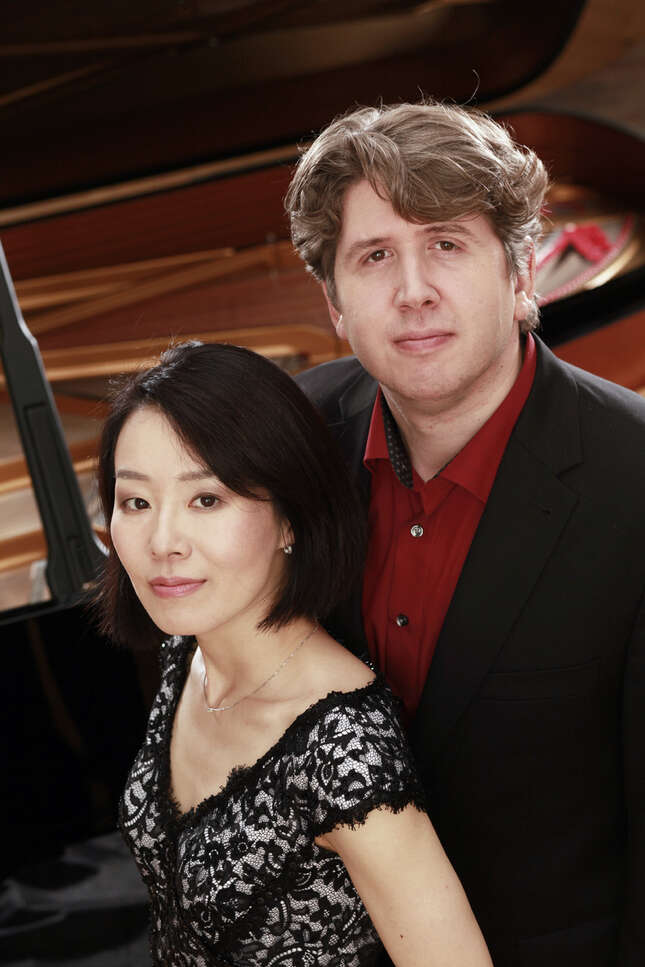
Ensemble piano duo PianoDuo Takahashi|Lehmann
The Piano Duo Takahashi / Lehmann was founded in 2009 in Berlin.
The two pianists have known each other since their days as students
of Klaus Hellwig at the Universität der Künste Berlin.
Since its founding, the concert activities of the Duo have constantly
gained in intensity.
The musicians perform in numerous European countries as well as in Korea
and Japan. The Duo has also been invited to festivals including the MusicAlp Festival (France) and the Gimhae Festival (Korea).
The repertoire of the Duo Takahashi / Lehmann includes, alongside the
traditional works for piano four hands and for two pianos, numerous original
transcriptions of important composers, some of which had previously been forgotten, as well as works of the 20th century. In this connection, the two
pianists always work together closely with contemporary composers.
The programmes of the Duo Takahashi / Lehmann are notable for the manifold relationships between the works, so that one can frequently speak of “composed programmes”. For all that, the relationships are by no means merely theoretical,
but can readily be perceived sensually and emotionally.
Björn Lehmann has performed to an equal extent as soloist and chamber
musician, whereby his main interest in both areas is New Music.
He studied in Hamburg, Lausanne and at the Universität der Künste Berlin
with Klaus Hellwig.
He received important artistic stimuli from Ferenc Rados, Leonard Hokanson, Robert Levin, Zoltan Kocsis, members of the Amadeus Quartet, Hartmut Höll and
Irwin Gage, amongst others.
Concert tours have taken Björn Lehmann to most European countries, Japan,
South Korea and Latin America.
He has performed at numerous festivals, including the Bachfest in Leipzig, the Ludwigsburg Castle Festival, the Kassel Music Days, Concentus Moraviae (Czech Republic), Flaneries musicales de Reims (France) and El Blanco y Negro (Mexico). Permanent chamber-music partners include the violinists Sophia Jaf fé and Stephan
Picard, the cellist Markus Nyikos as well as musicians of the Berlin Philharmonic.
Björn Lehmann has collaborated closely with the composers Friedrich Goldmann,
Mathias Spahlinger and Arnulf Herrmann and has made radio/television recordings at German and other broadcasting stations.
Björn Lehmann has been a professor at the Universität der Künste Berlin since 2011.
He gives master courses on a regular basis in Germany, France, Switzerland, Japan and South Korea.
Norie Takahashi attracted early attention by winning prizes at competitions, including the Beethoven Competition in Bonn (2nd prize, special prize for a
contemporary work), the Beethoven Competition in Vienna (4th prize),
the Schubert Competition in Graz (1st prize and audience prize), the Leeds International Piano Competition (special prize) and the Concours Reine Elizabeth
in Brussels (finalist’s diploma).
Following her studies in Tokyo, she continued studies with Klaus Hellwig
at the Universität der Künste Berlin.
She received numerous artistic stimuli from Bruno Leonardo Gelber, Robert
Levin, Ferenc Rados, Pascal Devoyon and Dietrich Fischer-Dieskau, amongst
others.
Norie Takahashi is active as a soloist and chamber musician in many European
countries and in Asia.
She performs as a soloist with such orchestras as the
Prague Radio Orchestra, the Bonn Beethoven Orchestra, the Cologne Chamber
Orchestra, the Yomiuri Nippon Orchestra in Tokyo, the New Japan Philharmonic
Orchestra and the Osaka Symphony Orchestra.
In addition, she has regularly been invited to participate at major international festivals, including Carinthian Summer, Ruhr Piano Festival , Männta Music Festival (Finland), Tongyeong Music Festival (Korea), Sendai Music Festival (Japan), Kassel Music Days, New Music Days in Darmstadt and the Mosel Festival.
Norie Takahashi’s chamber-music partners include the cellists Johannes Moser and Danjulo Ishizaka, the violinist Viviane Hagner and the violist Tomoko Akasaka.

Ensemble choir Luzerner Festwochenchor

Ensemble !!!Streichorchester!!! Festival Strings Lucerne

Ensemble orchestra Orchestre Philharmonique de la RTF

Ensemble choir ensemble officium
ensemble officium gehört zu den renommiertesten Vokalensembles für Alte Musik in Deutschland. Das Solistenensemble gründete sich im Jahr 1999 und hat seinen Sitz inzwischen in der Universitätsstadt Tübingen. Im Jahr der Gründung wurden dem Ensemble gleich zwei Erste Preise beim renommierten intern. Chorwettbewerb »Guido d'Arezzo« in Arezzo/Toscana verliehen. In der Folge hat sich das Ensemble in den vergangenen Jahren mit seinen Interpretationen von Musik der Renaissance, Gregorianischem Choral und mittelalterlicher Mehrstimmigkeit international einen hervorragenden Namen gemacht.
Im Zentrum der Arbeit des Ensembles steht die Auseinandersetzung mit der Aufführungspraxis und dem Repertoire der Vokalpolyphonie des ausgehenden 16. Jahrhunderts in Italien und Süddeutschland. Neben den Werken von Palestrina, denen sich das Ensemble von Anfang an widmete, waren es jüngst die Bemühungen um das weit reichende Beziehungsgeflecht um Orlando di Lasso und dessen Münchener Schule, mit dem das Ensemble auf sich aufmerksam machte. Motetten und Madrigale für bis zu 24 Stimmen gehören zu den spannenden Entdeckungen dieser Zeit.

Ensemble string quartet Hendel-Quartett

Ensemble string quartet Streichquartett Berlin

Ensemble orchestra RIAS-Studioorchester
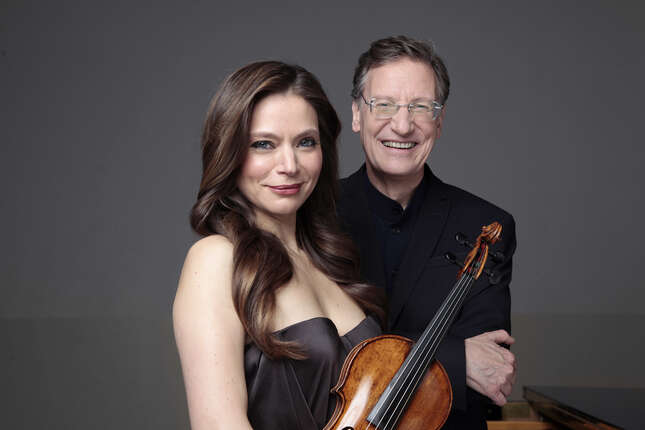
Ensemble duo Franziska Pietsch und Detlev Eisinger
Die Geigerin Franziska Pietsch und der Pianist Detlev Eisinger
sind beide international renommierte Künstler.
Ihre eigenen, interessanten Lebensläufe bringen die Liebe
und Kreativität ihrer künstlerischen Welt zum Ausdruck.
Besonders am Herzen liegt Ihnen daher die sensible und
intimste Form der Kammermusik . In Ihrem Duo haben sie
eine ganz persönliche Sprache gefunden und gehen
seit 2012 einen gemeinsamen musikalischen Weg.
Sie spiegeln eine Symbiose aus höchstem solistischen Anspruch
und Intimität der Kammermusik leidenschaftlich wieder.
Die individuelle und inspirierende Weise, in der beide Musiker
in Ihren gemeinsamen Konzerten die Instrumente sprechen
und verschmelzen lassen, wird seitdem vom Publikum und der
Fachpresse hochgelobt.
"...Interpretationen in höchster Vollendung, sowohl was die
Technik, als auch was den Ausdruck und erst recht, was das
Zusammenspiel anging." (Ruhr Nachrichten 2014)
Die erste gemeinsame CD ist im April 2014 beim
Label Musicom erschienen.
Ihre neue Einspielung aller Grieg Sonaten wurde im Juli 2015
beim Label Audite veröffentlicht.