Ihre Suchergebnisse (9960 gefunden)

Series 7 of 8 productions Beethoven Complete String Quartets with Quartetto di Cremona

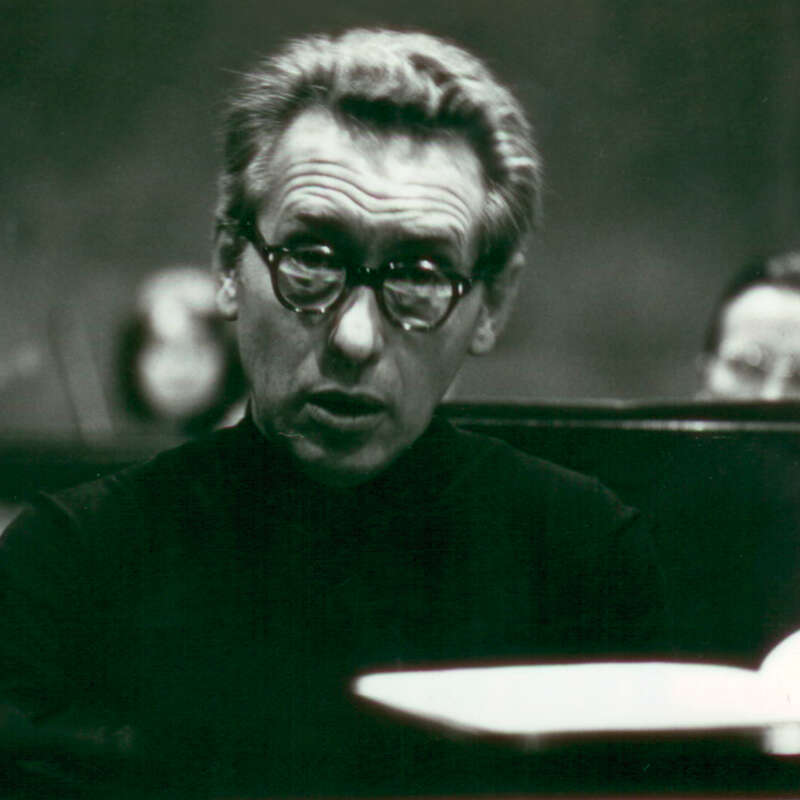
​During the past ten years, the Quartetto di Cremona has matured into a string quartet of international radiance, uniting Italian string culture with an awareness of historical performance practice. Having been trained both by Piero Farulli of the Quartetto Italiano and Hatto Beyerle of the Alban Berg Quartet, the performance culture of the Quartetto di Cremona moves in a special tension between Italian and German- Austrian influences. A very passionate, emotional manner of playing is united with a marked feeling for musical architecture, cultivating the merging of structure and expression, of external form and internal passion. This ensemble has thus developed into one of the most highly profiled and imaginative in Europe.
This position is documented by the series begun by audite of the complete Beethoven string quartets - a cycle that has always been a touchstone for all quartets.

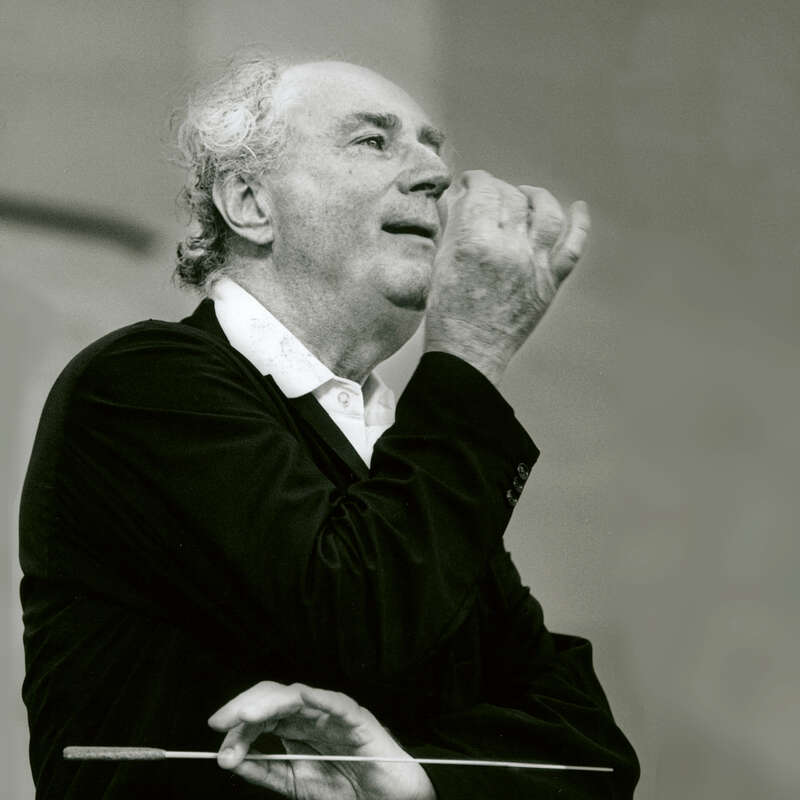
Series 5 of 6 productions ​Schumann: Complete Symphonic Works with the WDR Symphony Orchestra Cologne under the Direction of Heinz Holliger

Heinz Holliger's interpretations of Schumann's compositions are based on his nearly lifelong occupation with the work, thinking, personality and fate of this composer. The cliché of Schumann the weak orchestrator is refuted in Holliger's recordings through feathery-light verve and a detailed, subdivided orchestral sound, lending transparency and lightness to the opulent scores.
With this series of the complete orchestral works of Robert Schumann, comprising all the symphonies (including both versions of the Fourth) as well as all the overtures and concertos (part V with the concert pieces is unfortunately sold out and no longer part of this series!!!), the WDR Symphony Orchestra Cologne under the direction of Heinz Holliger succeeds in making a refreshing and well-founded correction of the widespread image of Schumann.

Series at present 3 productions Carsten Wiebusch: Organ Works

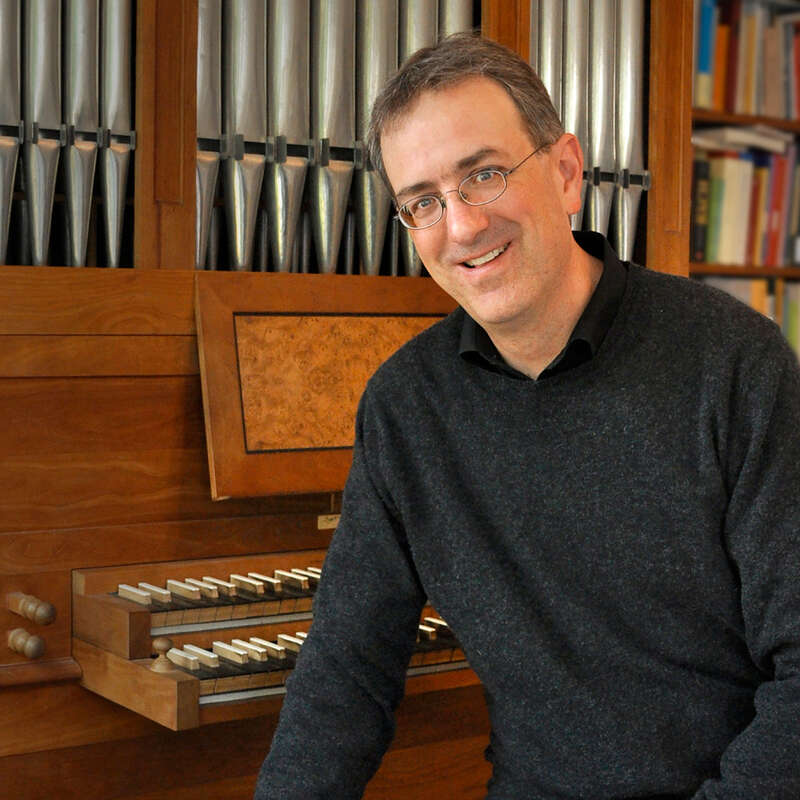
Carsten Wiebusch, born in 1969 in Göttingen, studied at the Music Academies in Düsseldorf and Stuttgart as well as at the Folkwang Academy in Essen. From 1993 until 1999 he was organist in Essen-Werden at the late-romantic Walcker organ. During this time, he made his internationally renowned debut CD on the audite label with works of Wagner, Reger and Mussorgsky, marking the beginning of an entire series of productions with this outstanding organist.
In 1999 Wiebusch moved to the Christuskirche in Karlsruhe, an ecclesiastical music centre in southwest Germany where he also took over the directorship of the oratorio and chamber choir.  This successful collaboration is also documented by a recording together with Christmas organ and choir music (fermate 40.004 "Engel, Hirten, Könige").
Especially designed for the abundance of colours is Wiebusch's latest release of this series. For "Claude Debussy: La Cathédrale engloutie" he interpreted the Preludes and Suite bergamasque, two standard works of piano repertoire, on the organ and intensified the abundance of colours to a multiple by registering them. Played on the organ Debussy's works run seamlessly into the soundscapes of Olivier Messiaen.

Series at present 6 productions Music from the Muri Monastery Church

The practice of multiple choir music-making reached a climax with Giovanni Gabrieli in the balconies of San Marco in Venice towards the end of the 16th century, and from there gained a wide style-forming influence far beyond the borders of Italy. The octagonal church interior of the Muri Monastery Church with its four balconies  was specially designed for multiple choir music-making by the abbots and master builders. The four balconies of the Muri Monastery Church offer ideal conditions for the performance of works for multiple choirs.
Introduced by the rediscovery of the "Mass of Muri", which could be definitively ascribed to Johann Valentin Rathgeber in 2005, audite began a series in 2007 consisting of eight parts so far, completely dedicated to the symbiosis of the outstanding spatial acoustics of the church and the sounds of historical Instruments - including the four balconies of the Muri Monastery Church whenever possible. In addition, this is a sonic documentation of the two historical Bossart organs from the early 17th century. These instruments enjoy great prestige beyond the borders of Switzerland as an important sonic monument visited by specialists and amateurs from all over the world each year.
The production "Christ lag in Todesbanden", in which settings by four baroque composers of this Easter chorale are contrasted, is, at the same time, the first recording of the great organ of the Muri Monastery Church following its comprehensive restoration. "Music for Two Organs" with compositions of the 17th century Habsburg court in Vienna - recorded in the Muri Monastery founded by the predecessors of the Habsburgs - is also primarily dedicated to the sonic interplay between the two Bossart organs.
The recording "Echo & Risposta" turns to the musical practice of the early Baroque period in succession to Giovanni Gabrieli. The choirs entering into dialogue with each other were distributed over four balconies so that the architecture of the church could be best used for the sonic design.
The recording "Polychoral Splendour" with works by Heinrich Schütz and Giovanni Gabrieli is a highlight of this impressive sonic and spatial effect; it received an International Classical Music Award (ICMA) in 2012. In accordance with the historical model, the Cappella Murensis and the Ensemble Les Cornets Noirs make use of the situation of the four music balconies: in the works for two, three and four choirs, voices and instruments blend together with the four continuo organs to form a unique sound. The two historical Bossart organs ("Epistle Organ" and "Gospel Organ") are also used. The use of these two great organs ensures additional dynamic range.
Johannes Strobl - the organist of the Catholic church community of Muri in the canton of Aargau since 2001 and in charge of all recording projects - has proven himself, together with the Cappella Murensis, Les Cornets Noirs and the Ensemble Arcimboldo, an outstanding specialist for the performance practice of Early Music. Together with the ensembles, he regularly cultivates music-making in multiple choirs at considerable distance from each other.

Series at present 3 productions Piano Duo Takahashi | Lehmann

​In this series Norie Takahashi and Björn Lehmann explore the multifaceted cosmos of transcriptions for piano duet. In Part I, the musicians focus on three orchestral and ensemble masterpieces, arranged for piano duet by their own composers. In Part II the two pianists perform original works or arrangements made or sanctioned by the composers themselves. The third audite recording of the PianoDuo Takahashi|Lehmann presents transcriptions of pre-existing works as well as new compositions permeated with musical quotes and allusions. Drawing on musical history, existing works are approached in diverse ways, from using almost original material through to dissolving the classical concept of time and epochs.

The virtuoso pianists combine their passionate expressivity with an intellectual programmatic conception. Their equally intelligent and touching playing makes even seemingly abstract works accessible to the listener.  

Series at present 4 productions Historical Recordings of Legendary Cellists

This audite series with studio productions and live recordings from the years 1949 to 1976 from the archive of Swiss Radio and Television (SRF) and the German Radio Archive (DRA) provides an overview of the legendary cellists of this period, including Pierre Fournier and Paul Tortelier as well as the both pivotal figures for the establishment of female cellists Zara Nelsova and Jacqueline du Pré.

Pierre Fournier (1906-1986) was one of the most eminent cellists of the generation after Pablo Casals. Praised as an "aristocratof cello playing", he was admired for his soulful, singing tone, his uncomplicated elegance and his refined sound. This disc presents three live recordings from this legacy, recorded at LUCERNE FESTIVAL and all of them released for the first time, including Saint-Saëns' First Cello Concert in Aminor, Op. 33 as well as Casals Cant dels ocells. Beside this Fournier performed together with István Kertész a piece of his core repertoire in the summer of 1967: Antonín Dvořák's Cello Concertoin B minor, Op. 104 - a particularly noteworthy archive discovery since the conductor's tragically early death had prevented him from making a studio recording of the concerto.

The recordings of Zara Nelsova from the sound archives of RIAS Berlin, made between 1956 and 1965, complement her discography substantially, giving a more rounded impression of her artistic profile. They include works which Nelsova never recorded commercially and which are available on disc for the first time, such as the Cello Concertos by Darius Milhaud (No 1) and Dmitri Kabalewski (No 1).

A great moment in Berlin's post-war musical life: on 5 March 1963 the 18-year-old cellist Jacqueline du Pré and the 22-year-old pianist Bruno Leonardo Gelber made their solo concerto débuts. The poetry, energy and musical coherence of du Pré's interpretation of the Schumann Cello Concerto rank alongside her later recording of the piece.

The latest production in this series is dedicated to the exceptional French cellist Paul Tortelier, whose studio recordings from 1949-1964 for the Berlin RIAS are published here for the very first time and impressively reflect the enormous range of his repertoire. 

Series at present 2 productions Anne-Cathérine Heinzmann: Works for Flute

​In the twentieth century, the flute underwent a remarkable revival as a solo instrument. The first part of this series includes amongst others sonatas by Henri Dutilleux and Francis Poulenc which represent the impulse for this development, originated in France. Beside works for flute by Paul Hindemith, Robert Muczynski and Frank Martin they belong to the core repertoire of this instrument. The second part of this series deals with rearly heard works by Schulhoff, Smit, Gál, Raphael and Tansman. In their respective aesthetics, each composer shares the ability to use forms and models of music history as inspiration for his own modern musical language. Existentially, they shared a common fate: all were persecuted by the National Socialists. Some were murdered in concentration camps and others fled to continue their lives in exile.

Anne-Cathérine Heinzmann is one of the most renowned German flautists of her generation. She regularly performs as a soloist, chamber and orchestral musician in Germany and across the globe. She is co-principal flute of the Opern- und Museumsorchester Frankfurt am Main; in addition, since October 2009 she is Professor of Music at the Hochschule für Musik in Nuremberg.

Series at present 10 productions Franziska Pietsch

As an emerging talent in the GDR, Franziska Pietsch enjoyed special state support. After her father's escape to the West in 1984, two years of reprisals by the regime followed, intensively shaping Franziska Pietsch's understanding of music: deprived of any possibility of playing concerts or taking lessons, her chosen path towards hope - against desperation, refusal, fear and despotism - led inwards. Music became the only language in which she was able to express herself freely and which gave her the necessary strength to withstand external circumstances, continuing to hope for freedom. These were the origins of the intensity and artistic depth which characterise Franziska Pietsch's playing to the present day.
Pietsch's releases on the audite label present works which reflect facets of her own biography to a significant degree.

Series at present 2 productions Salaputia Brass

What do you get when eleven young musicians join together, who met already as young musicians while playing for the Bundesjugendorchester (German National Youth Orchestra) and now play as professional musicians in famous German orchestras? Salaputia Brass - a first-class brass ensemble, with a wide-ranging repertoire.

On their debut CD "Sounds of Evolution", the young musicians present their commissioned works, written especially for their formation by well-known composers from around the world, including great names such as Daniel Schnyder, Derek Bourgeois and Ingo Luis.

The follow-up CD "Signals from Heaven" combines spirituals and spiritual music by Takemitsu, Gabrieli, Monteverdi, Gershwin and Ellington. The developed concept of this CD by Jeroen Berwaerts, who performs here in cooperation with Salaputia Brass as a trumpet soloist and jazz vocalist and directs the ensemble, does not represent "crossover" but a combination of voices which have something to say to one another. This search for a soulful profundity in music unites all participating artists, as well as the aim of connecting people through music.​

Series 2 of 2 productions Ulrich Roman Murtfeld: American Recital

​​This cross-section of North American piano music immerses the listener in a fascinating musical cosmos that is especially notable for its stylistic variety. In its search for an identity, this variety has been characteristic of American music from its beginnings - a unique situation resulting in permanent cultural exchange.
During volume 1 of this series is focusing on the years 1850-1890 with compositions by Gottschalk, Gershwin, Barber, Rzewski and Glass, the pieces presented in the second release span 150 years, ranging from sonatas by the British-born American composer Alexander Reinagle, written in 1790, to works by Roger Sessions (written around 1940), one of the most significant representatives of academic American modernism. 

Suche in...

...