Neuigkeit 20.01.2015 | Sabine Wiedemann Neues Audiophile Audition: Best of the Year Discs 2014
Lesen Sie hier die Rezension vom Juni 2014 von Audiophile Audition in voller Länge:
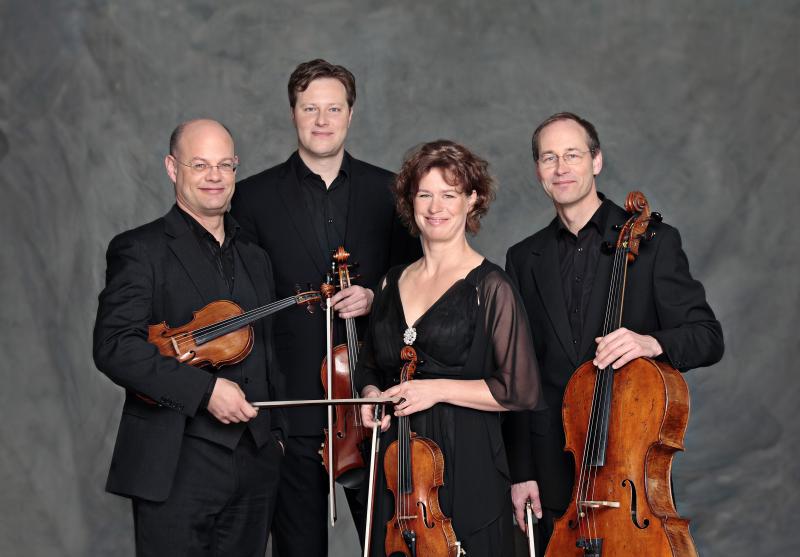
During the past ten years, the Quartetto di Cremona - Cristiano Gualco, violin; Paolo Andreoli, violin; Simone Gramaglia, viola; Giovanni Scaglione, cello - has matured into a string quartet of international renown, uniting Italian string culture with an awareness of historical performance practice. Having been trained both by Piero Farulli of the Quartetto Italiano and Hatto Beyerle of the Alban Berg Quartet, the performance culture of the Quartetto di Cremona achieves a special tension between Italian and German- Austrian influences. Many critics see the ensemble as the natural heir of the Quartetto Italiano for its insistence on passion in performances that accentuate the work's architecture. The cycle of complete Beethoven string quartets - a cycle that has always been a touchstone for all quartets - continues with this
installment, recorded 3-5 June 2013.
The 1800 C Minor Quartet, Op. 18, No. 4, perhaps the most dramatic of the set of six, may borrow much from Haydn, but its nervous vitality belongs to Beethoven alone. Vivid execution marks the Quatetto di Cremona's driven first movement, in which even the relatively sunny second subject in E-flat Major reveals its taut extension of the opening subject. The plangent tone of Scaglione's cello proves arresting throughout. Those explosive chords from the violins seem to demolish the niceties of Classical procedure. First violin Cristiano Gualco engages in a furious concertante part, at times virtually a miniature concerto. A fugal Andante scherzoso - itself a paradoxical designation - comunicates its own ironies here. The polyphony becomes tripartite while maintaining a 'galant' poise, perhaps a mask in sonata-form, a device appreciated by a later contrapuntal master, Gustav Mahler. An agitated Menuetto in a nervous C Minor proffers biting accents and syncopations, in this performance deliciously neurotic. Beethoven particularly insists that the repeat be taken faster to avoid a bored and predictable da capo. The perpetual strife between light and dark, major and minor, finds a natural arena in the Allegro - Prestisssimo finale, a kind of gypsy dance with three gentler interludes. Gruff chords from the cello start the mad dance anew, with Beethoven's opting for humor as his last, natural anodyne to whatever tragedy may have passed in this powerful quartet.
Beethoven's own contrapuntal power had evolved a long way by the year 1825, when he attached the Great Fugue to the body of his Quartet in B-flat Major, Op. 130. Severe and uncompromising, the piece exists as a separate entity - at the suggestion of the Vienna publisher Artaria - that compresses overture and sonata-form into a polyphonic, chromatic mass of incredible intensity and austere beauty. Beethoven's penchant for breaking his theme and dotted-rhythm countersubject into small units anticipates techniques favored by the Second Viennese School of Schoenberg and Webern. The Cremona ensemble, after having wrung our ears and hearts for 130 measures, offers an extremely tender version of the theme, Meno mosso e moderato, that melts our intellectual defenses. Beethoven's ability to move mercurially through the same materials in disguised forms, riddled with trills and triplets, dazzles the ear and the imagination, the theme's often playing against itself in inversion. The acoustical space actually seems to contract, until we reach a loud, unisono repeat of the theme for the coda, then uttered softly, moving to an exhilarated sense of liberation, the Cremona group's hard-won resolution.
Beethoven maintained an Arcadian warmth for the key of F Major, and his 1806 Quartet No. 7 in F Major, Op. 59, No. 1 confirms the rule. Count Razoumovsky, who commissioned the Op. 59 tryptich, insisted Beethoven include a Russian motif in his quartets. Beethoven produced a work of staggering length for a chamber music piece, beset with complex part-writing for his principals, at that time embodied by the Schuppanzigh Quartet. A double fugue serves as a developmental procedure in the middle of the opening Allegro, surely a test of players and audience. The Cremona players toss off sforzati and sudden crescendi with a seamless aplomb. Even here, Beethoven's tendency to pulverize his musical materials into explosive kernels of melody anticipates his own and later composers' styles.
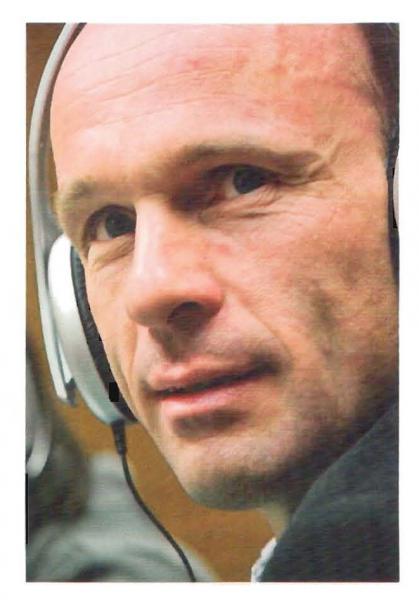
The ensuing rhythmic pulse and energetic buzz of the Allegretto provide a clear model for Gustav Mahler, who likewise delights in that sempre scherzando affect that confounds Classical expectations. Wonderful synchronicity of parts evolves in the Cremona players, especially between first violin and cello. The rhythms become ever more intricately varied, altering accent and metric pulse, often attaining a symphonic texture in this kaleidoscopic dance of life. When we hear the almost Baroque poignancy of the expansive third movement, Adagio molto e mesto, we immediately feel the Cremona players' deep appreciation of this music's impact on Bela Bartok. Once more, Staglione's mournful cello compels our ardent musing upon large questions of experience. Kudos to the marvelous engineering of this movement - courtesy of Ludger Boeckenhoff - for the absolutely lifelike resonance of parts. Finally, to honor his contract, Beethoven utilizes a tune he found in Prac's Collection of Russian Songs, a soldier's air on the hardships of military life, and converts it into a gleeful F Major. The Theme russe provides learned material for sonata-form development, but the sheer glee of execution from Quartetto di Cremona makes us think momentarily of Dvorak, and we forget how plastic and genially rustic Beethoven can be when his invention remains charismatically optimistic.
(Gary Lemco - 20.06.2014)
During the past ten years, the Quartetto di Cremona - Cristiano Gualco, violin; Paolo Andreoli, violin; Simone Gramaglia, viola; Giovanni Scaglione, cello - has matured into a string quartet of international renown, uniting Italian string culture with an awareness of historical performance practice. Having been trained both by Piero Farulli of the Quartetto Italiano and Hatto Beyerle of the Alban Berg Quartet, the performance culture of the Quartetto di Cremona achieves a special tension between Italian and German- Austrian influences. Many critics see the ensemble as the natural heir of the Quartetto Italiano for its insistence on passion in performances that accentuate the work's architecture. The cycle of complete Beethoven string quartets - a cycle that has always been a touchstone for all quartets - continues with this
installment, recorded 3-5 June 2013.
The 1800 C Minor Quartet, Op. 18, No. 4, perhaps the most dramatic of the set of six, may borrow much from Haydn, but its nervous vitality belongs to Beethoven alone. Vivid execution marks the Quatetto di Cremona's driven first movement, in which even the relatively sunny second subject in E-flat Major reveals its taut extension of the opening subject. The plangent tone of Scaglione's cello proves arresting throughout. Those explosive chords from the violins seem to demolish the niceties of Classical procedure. First violin Cristiano Gualco engages in a furious concertante part, at times virtually a miniature concerto. A fugal Andante scherzoso - itself a paradoxical designation - comunicates its own ironies here. The polyphony becomes tripartite while maintaining a 'galant' poise, perhaps a mask in sonata-form, a device appreciated by a later contrapuntal master, Gustav Mahler. An agitated Menuetto in a nervous C Minor proffers biting accents and syncopations, in this performance deliciously neurotic. Beethoven particularly insists that the repeat be taken faster to avoid a bored and predictable da capo. The perpetual strife between light and dark, major and minor, finds a natural arena in the Allegro - Prestisssimo finale, a kind of gypsy dance with three gentler interludes. Gruff chords from the cello start the mad dance anew, with Beethoven's opting for humor as his last, natural anodyne to whatever tragedy may have passed in this powerful quartet.
Beethoven's own contrapuntal power had evolved a long way by the year 1825, when he attached the Great Fugue to the body of his Quartet in B-flat Major, Op. 130. Severe and uncompromising, the piece exists as a separate entity - at the suggestion of the Vienna publisher Artaria - that compresses overture and sonata-form into a polyphonic, chromatic mass of incredible intensity and austere beauty. Beethoven's penchant for breaking his theme and dotted-rhythm countersubject into small units anticipates techniques favored by the Second Viennese School of Schoenberg and Webern. The Cremona ensemble, after having wrung our ears and hearts for 130 measures, offers an extremely tender version of the theme, Meno mosso e moderato, that melts our intellectual defenses. Beethoven's ability to move mercurially through the same materials in disguised forms, riddled with trills and triplets, dazzles the ear and the imagination, the theme's often playing against itself in inversion. The acoustical space actually seems to contract, until we reach a loud, unisono repeat of the theme for the coda, then uttered softly, moving to an exhilarated sense of liberation, the Cremona group's hard-won resolution.
Beethoven maintained an Arcadian warmth for the key of F Major, and his 1806 Quartet No. 7 in F Major, Op. 59, No. 1 confirms the rule. Count Razoumovsky, who commissioned the Op. 59 tryptich, insisted Beethoven include a Russian motif in his quartets. Beethoven produced a work of staggering length for a chamber music piece, beset with complex part-writing for his principals, at that time embodied by the Schuppanzigh Quartet. A double fugue serves as a developmental procedure in the middle of the opening Allegro, surely a test of players and audience. The Cremona players toss off sforzati and sudden crescendi with a seamless aplomb. Even here, Beethoven's tendency to pulverize his musical materials into explosive kernels of melody anticipates his own and later composers' styles.
The ensuing rhythmic pulse and energetic buzz of the Allegretto provide a clear model for Gustav Mahler, who likewise delights in that sempre scherzando affect that confounds Classical expectations. Wonderful synchronicity of parts evolves in the Cremona players, especially between first violin and cello. The rhythms become ever more intricately varied, altering accent and metric pulse, often attaining a symphonic texture in this kaleidoscopic dance of life. When we hear the almost Baroque poignancy of the expansive third movement, Adagio molto e mesto, we immediately feel the Cremona players' deep appreciation of this music's impact on Bela Bartok. Once more, Staglione's mournful cello compels our ardent musing upon large questions of experience. Kudos to the marvelous engineering of this movement - courtesy of Ludger Boeckenhoff - for the absolutely lifelike resonance of parts. Finally, to honor his contract, Beethoven utilizes a tune he found in Prac's Collection of Russian Songs, a soldier's air on the hardships of military life, and converts it into a gleeful F Major. The Theme russe provides learned material for sonata-form development, but the sheer glee of execution from Quartetto di Cremona makes us think momentarily of Dvorak, and we forget how plastic and genially rustic Beethoven can be when his invention remains charismatically optimistic.
(Gary Lemco - 20.06.2014)