Ihre Suchergebnisse

Neuigkeit Nov 13, 2012 | Wencke Wallbaum News Nine audite productions nominated for ICMA 2013

Nominated audite productions:

  • aud. 92.652 Polychoral Splendour from the four galleries of the Abbey Church of Muri (category: Baroque Vocal)
  • aud. 92.656 Mendelssohn: Complete Chamber Music for Strings, Vol. 1 (category: Chamber Music)
  • aud. 92.576 Stravinsky: Divertimento - Shostakovich: Violin Sonata Op. 134 (category: Chamber Music)
  • aud. 97.536 Arnold: Sonatina for Clarinet and Piano - Debussy: Rhapsody for clarinet & piano - Poulenc: Clarinet Sonata - Saint-Saëns: Clarinet Sonata in E flat major - Schumann: Fantasiestücke Op. 73 (category: Chamber Music)
  • aud. 92.673 Tchaikovsky: Piano Trio Op. 50 'In Memory of a Great Artist' (category: Chamber Music)
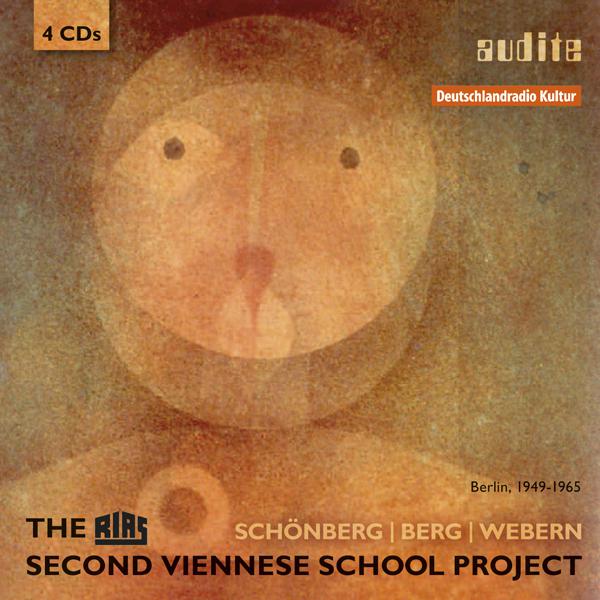
  • aud. 21.412 Second Viennese School Project (category: Historical Recordings)
  • aud. 21.408 Otto Klemperer - RIAS recordings Berlin 1950-1958 (category: Historical Recordings)
  • aud. 23.426 Schubert - Schumann - Wolf - Duparc - Ravel - Debussy (category: Historical Recordings)
  • aud. 21.415 The Rias Bach Cantatas Project Berlin, 1949-1952 (category: Historical Recordings)


The winners of the ICMA 2013 will be announced on 1st of February 2013, the Award Ceremony and Gala concert will take place in Milan, on the 18th of March 2013.
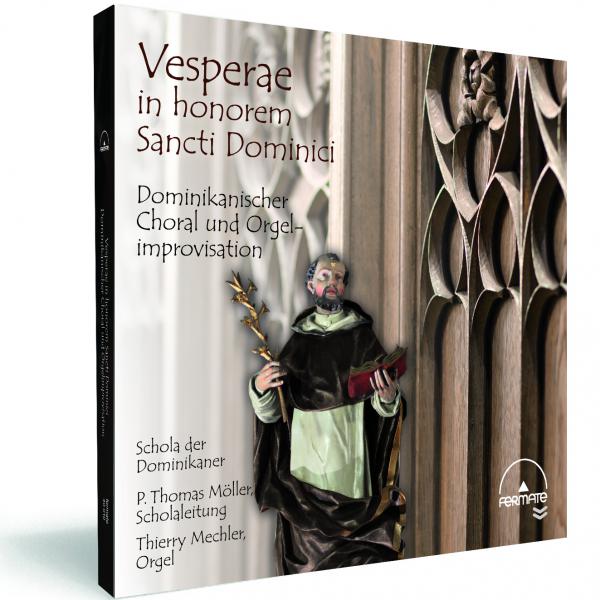
Neuigkeit Nov 27, 2013 | AB-Design Release Vesperae in honorem Sancti Dominici

This video provides impressions on the recording situation of the CD production for the album Vesperae in honorem Sancti Dominici, Gregorian Chants of the Dominicans and Organ Improvisations.

​​A choir of young Dominicans conducted by Father Thomas Möller OP sings solemn vespers in Latin in honour of St Dominic, founder of the order, in the Hamburg Dominican church of St Sophien. The order, which celebrates its 800th anniversary in 2016, has a long tradition of Gregorian Chants. In 1256, the General Chapter (the highest instance in the Dominican order) adopted its own liturgy, which remained the only valid form for Dominicans until the Second Vatican Council. On this CD, we can hear hymns and anthems that still today continue to be sung by Dominican friars and nuns world-wide in their liturgical prayer. In counterpoint to these Latin hymns and anthems, we hear the contrasting voice of the organ improvisations of Prof. Thierry Mechler -- one of the great organ virtuosos, famous for his own improvisation style.

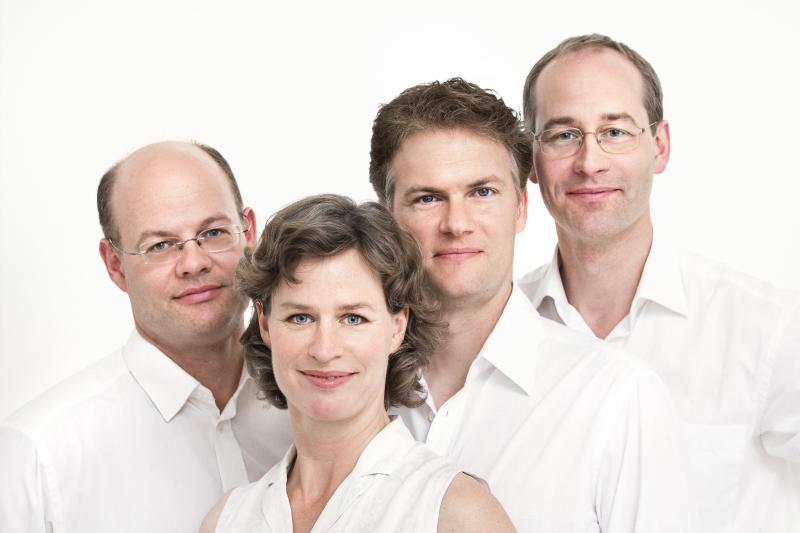
Neuigkeit Dec 6, 2012 | Sabine Wiedemann Artists Mandelring Quartett: Shostakovich cycle in Berlin

​The daily Tagesspiegel writes: "...what the much lauded and prize-winning Mandelring Quartet has to offer, with its disciplined tone, almost devoid of mystery, is something one would very much like to hear in clearest detail."

The Tageszeitung (taz) notes that the players, "while attacking the dynamic passages with ferocity, sustained the tension in the quiet sections and convinced their audience with their perfectly honed ensemble playing."

And the review on RBB (Radio Berlin and Brandenburg) remarks: "And what does the brilliant Mandelring Quartet do with it? Rhetoric never dominates. Even in the stormy passages they leave us room for our own emotions, and they craft the slow sections with such a wealth of detail that one strives not to miss a moment. And in their self-effacing approach these musicians perform the music above and beyond the suffering it expresses, so that the lament, when turned into music, can even bring consolation."

Neuigkeit Dec 7, 2012 | Sabine Wiedemann Artists & Release Commemorating the 50th anniversary of Kirsten Flagstad’s death

​These recordings were made on 9 and 11 May 1952 and document the latter part of Kirsten Flagstad's career. They were made a few weeks before her 57th birthday, thus at a time when most sopranos will have been forced to change over to the so-called character fach. The Norwegian soprano however, even at this late stage, was still in almost full command of her incomparably rich voice, even after a demanding career spanning over three decades.

The present recordings of two concerts given at the Berlin Titania-Palast with the Orchestra of the Municipal Opera are particularly noteworthy: on the one hand, the Wagner songs sound fresher and more present than in the recording made four years later under Hans Knappertsbusch; on the other, the Berlin live-recording of the Strauss songs is technically far superior to the recording made in London. By the way, in May 1950 Kirsten Flagstad had given the first performance of the "Four Last Songs" by Richard Strauss - at the request of the composer.

A tribute to her unique status was also the multitude of her concert engagements: During the course of her career, she sang more than eighty parts in around 2100 performances and also gave approximately 250 concerts with orchestra and 600 recitals.

The recording is available in stores and at www.audite.de.

Neuigkeit Jan 2, 2013 | Sabine Wiedemann Release "Pas de deux" CD of the Week at RBB

​rbb Kulturradio - music: CD of the week
author: Ulrike Klobes

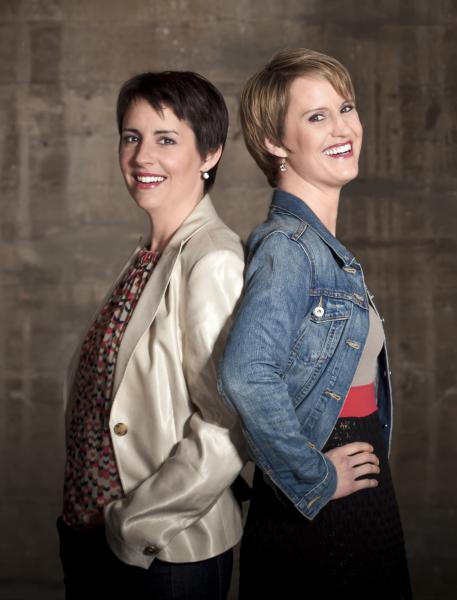
Vier Hände zwei Klaviere - Französische Musik mit dem Klavierduo Mona & Rica Bard
Seit ihrer Kindheit spielen die Schwestern Mona und Rica Bard zusammen Klavier. Während des Musikstudiums sind die beiden Pfälzerinnen zwar eigene Wege gegangen, aber so richtig konnten sie sich nicht voneinander trennen. Also haben sie sich zum "Klavierduo Mona & Rica Bard" zusammengetan. Jetzt haben sie ihre Debüt-CD mit französischer Musik veröffentlicht.

Vier Hände, die auf zwei Klavieren das Terrain französischer Tanz- und Ballettmusik erobern. Das ist der rote Faden, der sich durch die Debüt-CD von Mona und Rica Bard zieht. Passend dazu haben sie auch den Titel für ihr Album ausgewählt: Pas de Deux.

Für ihre Tanzstunde auf den Klaviertasten haben sich Mona und Rica Bard Bravourstücke von vier Franzosen ausgesucht: Maurice Ravel, Georges Bizet, Francis Poulenc und Darius Milhaud, dessen Scaramouche-Suite für eine feurige Eröffnung sorgt. Ruhiger geht es bei Ravels Rhapsodie espagnole zu, einer musikalischen Szenenfolge, in der der Franzose fantasievoll und virtuos seine Vorliebe für spanische Rhythmen und Melodien zum Ausdruck bringt. Verschiedene Tanzformen gibt es auch bei den zwölf entzückenden Miniaturstücken Kinderspiele von George Bizet. Unüberhörbar dreht sich hier ein bunter Kreisel, schwingt eine Schaukel verträumt hin und her oder setzt sich das Pferdekarussell im schnellen 6/8tel Takt in Bewegung. Dagegen setzten Mona und Rica Bard die ernsthafte und richtig ausgewachsene Sonate für zwei Klaviere und die schwelgerische Elegie von Francis Poulenc.

Ihre Pas de Deux-Stücke haben Mona und Rica Bard schon oft im Konzert gespielt. Mit der Studioaufnahme haben sie so lange gewartet, bis auch das kleinste Detail sitzt. Und so überzeugt dieses Album nicht nur durch viel Eleganz und Leichtigkeit, sondern auch durch punktgenaue Perfektion, egal ob technischer, dynamischer oder virtuoser Art. Das, sagt Mona Bard, sei eben so, wenn sich zwei Schwestern für dasselbe Instrument begeistern.

Die CD DER WOCHE wird montags um 9:45 Uhr ausführlich vorgestellt. Bis Sonnabend hören Sie täglich Auszüge daraus - und an jedem Tag der Woche gibt es auch - zu unterschiedlichen Zeiten - eine Gelegenheit, die CD zu gewinnen.

More information about the CD of the Week can be found here.

Neuigkeit Jan 15, 2013 | Wencke Wallbaum Award & Artists & Release Stereo - CD of the Month: Felix Mendelssohn Bartholdy - Complete Chamber Music for Strings, Vol. 2

Complete Review:
Stereo | 2/2013 (Februar) | Marcus Stäbler | 1. Februar 2013


Einer der Hauptvorwürfe der Nachwelt an Felix Mendelssohn lautet, er habe allzu "konservativ" komponiert. Als Beleg für diese Kritik gilt nicht zuletzt sein Quartettzyklus op. 44, der in der Tat häufig den klassischen Formschemata folgt. Dass unter dieser vermeintlich glatten Oberfläche indes sehr wohl das Leben tobt, zeigt das famose Mandelring-Quartett mit dem zweiten Teil seiner Gesamtaufnahme.

Schon der Beginn des op. 44,1 schäumt förmlich über vor Energie: Hier lodert unverkennbar jenes jugendliche Feuer weiter, das der Komponist schon in seinem frühen Oktett entzündete, und das nur von den Interpreten wieder neu entfacht werden muss.

Auch die schwerelose Eleganz Mendelssohns - etwa in den raschen Binnensätzen - ist beim Mandelring-Quartett in den besten Händen. Doch eben nur als eine von vielen Facetten, die bei anderen Ensembles mitunter verloren gehen. Indem die vier Streicher bei den Akzenten und Tremoli kraftvoll und mitunter auch knackig zupacken, geben sie der Musik in manchen Passagen eine schärfere Kontur, um dann wieder die elfenhaften Verwirblungen mit ganz feinem Pinsel nachzuzeichnen.

Das letzte, kurz nach dem Tod der geliebten Schwester Fanny entstandene f-MolI-Quartett schlägt einen ungleich dunkleren Ton an als fast alles, was Mendelssohn geschrieben hat. Wie die Interpreten uns hier am schmerzvoll gehetzten Vorandrängen der Musik teilhaben lassen, ist atemberaubend, nicht nur im Allegro assai.

Klanglich hätte dieses düstere Stück für meinen Geschmack stellenweise sogar noch schroffer in die Saiten gebürstet werden dürfen. Aber das bleibt der einzige Einwand gegen die dichte und sehr eigenständige Interpretation der Mandelrings.


Alle reviews about this production can be found here.

Suche in...

...